Is Agentforce GDPR-Compliant? An EMEA Checklist
EU data residency helps, but it does not make Agentforce GDPR-compliant on its own. Here is what EMEA teams must clear before go-live.

Practical lessons on Salesforce AI and Agentforce, CPQ, data migration, and platform engineering, focused on what actually worked and why.
AI-native delivery, Agentforce, and Einstein, built on a data foundation you can trust.
EU data residency helps, but it does not make Agentforce GDPR-compliant on its own. Here is what EMEA teams must clear before go-live.
A demo runs the happy path; real customers do not. Validation is how you prove an Agentforce agent is ready, with evidence, not hope.
An AI agent acts on your data, so dirty data becomes fast, confident mistakes. Here is the hygiene pass we run before any agent goes live.
Most AI consulting bills you for experimentation. Our model does the opposite: we absorb the token and compute cost, and you pay for shipped outcomes.
Plenty of Agentforce pilots look impressive in a demo and then stall. The difference between a demo and a deployment is almost always the data foundation and the governance around it.
Scoring a lead is easy. Routing it correctly, enriching it, and handing it to the right rep with context is where an Agentforce build earns its keep.
The fastest way to improve service metrics is often not answering cases faster. It is getting each case to the right queue, with the right priority, the first time.
AI speed is only an asset if it does not quietly introduce risk. The review step is not bureaucracy; it is what makes agent-accelerated delivery safe to put in production.
Quote-to-cash, pricing waterfalls, and guided selling that reps actually use.
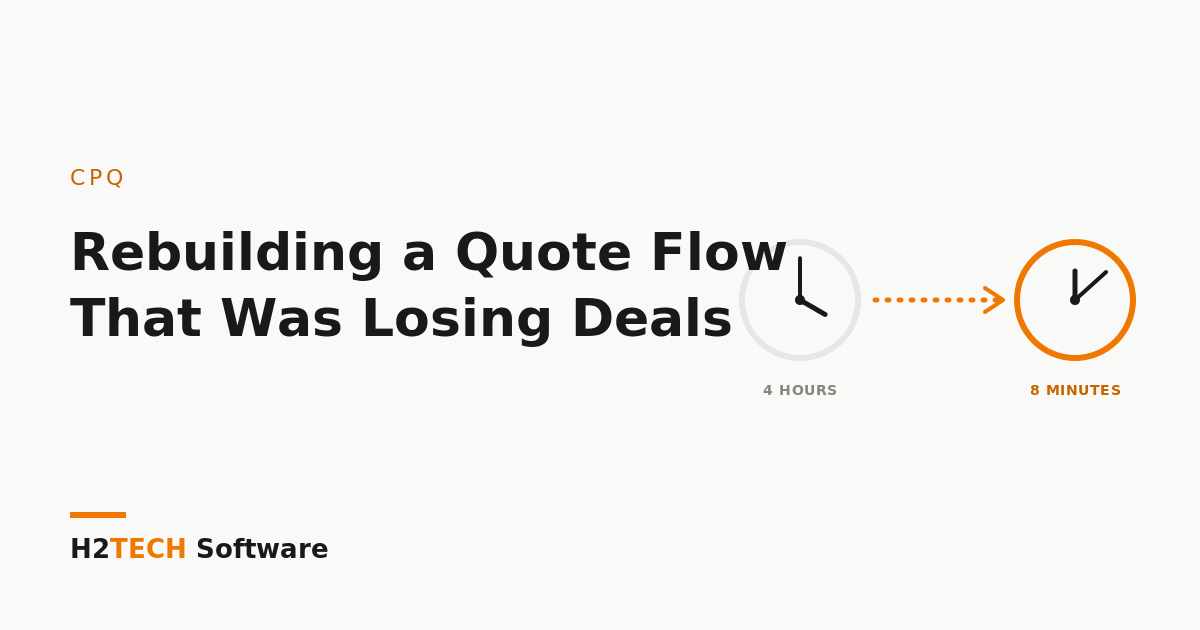
A high-volume SaaS business was taking hours to produce a single quote. Here is what the rebuild actually changed.
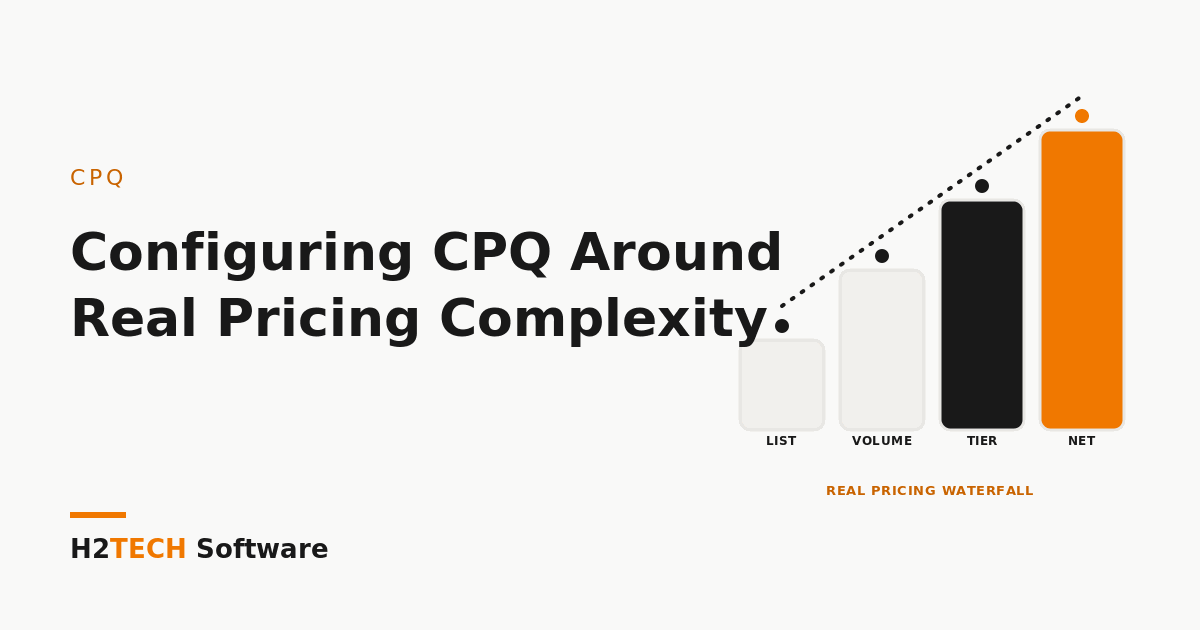
The quickest way to fail a CPQ project is to model a simplified version of your pricing. The pricing you actually use is the requirement.
Guided selling fails when it feels like a form to fight. Done well, it is the fastest path to a correct quote, and reps choose it over the workaround.
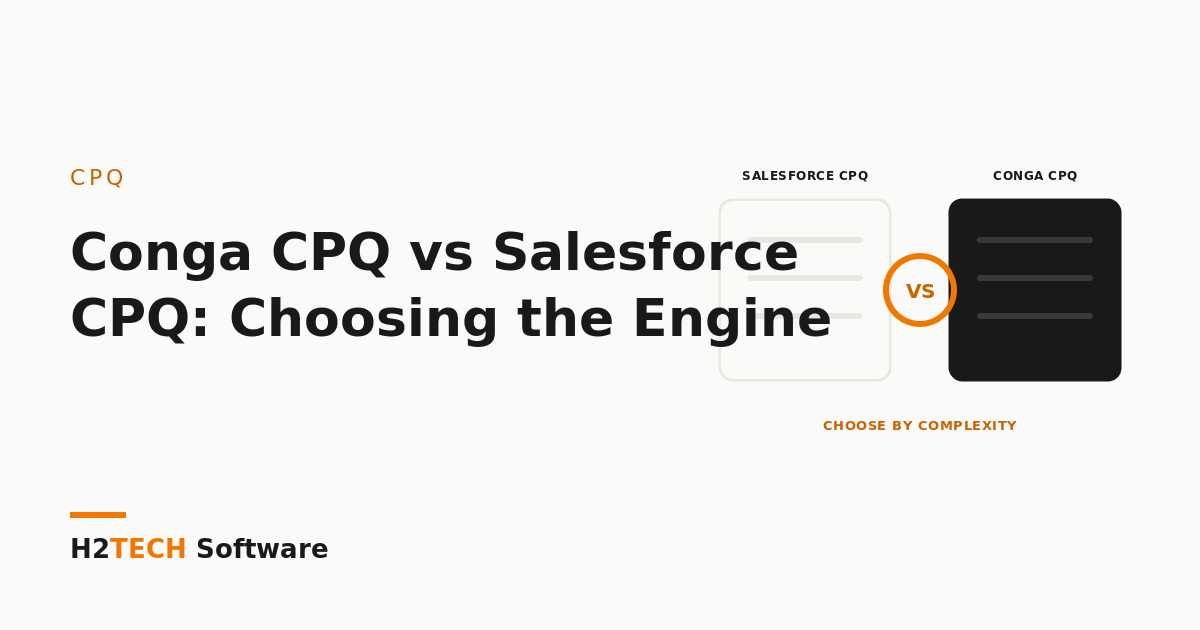
Both are capable. The right choice depends on your document needs, your pricing complexity, and where your team already lives. Here is how we decide.
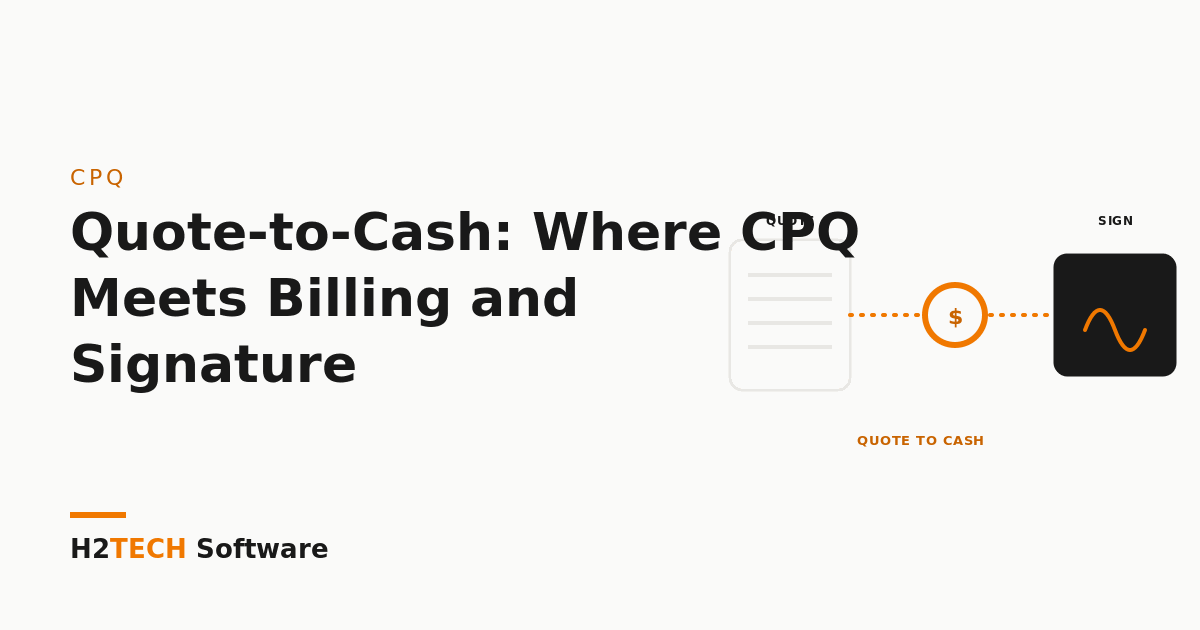
A quote is not the finish line. The value shows up when the quote flows cleanly into signature, order, and billing without anyone re-keying it.
Zero-data-loss migrations, org consolidation, and sandbox seeding with iSyncSF.
Multinationals inherit a Salesforce org per region. Consolidating them is less about moving data and more about reconciling versions of the truth.
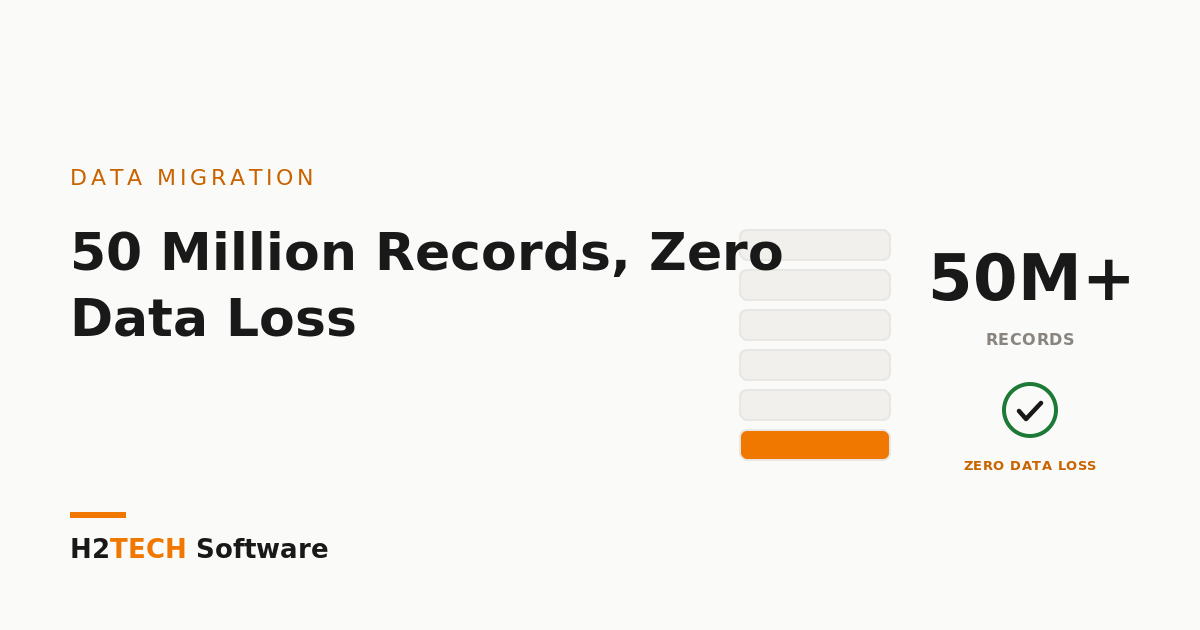
Zero data loss across tens of millions of records is not luck. It is a method: stage, validate, reconcile, and keep a rollback the whole way.
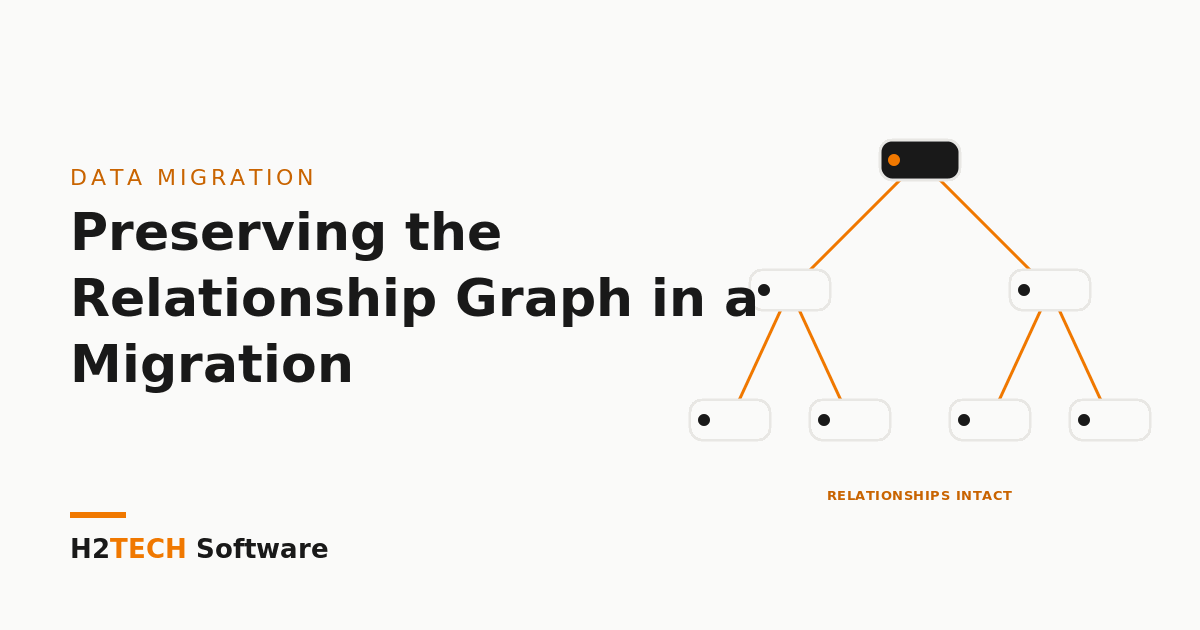
Moving records is easy. Moving them with every lookup, master-detail, and hierarchy intact is the part that breaks most migrations. It is also what iSyncSF is built for.
Acquisitions leave companies with a drawer full of Salesforce orgs. Consolidating them is less about moving data and more about resolving five versions of the truth.
Testing on empty sandboxes or hand-built data is why bugs reach production. Realistic, connected seed data is a quiet but large productivity win.
Migrating dirty data faithfully just gives you a clean copy of a mess. The transformation layer is where a migration becomes an upgrade.
Field notes on Apex, AppExchange, deployment, and architecture-first delivery.
When a long-standing authentication path is retired, the breakage is rarely where you expect. A field note on tracing the failure and moving integrations to OAuth cleanly.
Security review is where many ISV timelines slip. Having shipped our own product through it on the first submission, here is what reviewers actually look for.
Code that works on ten records and dies on ten thousand is a governor-limit problem, not a bug. Writing Apex that survives real volume is a habit, not a rescue.
Teams running several orgs live and die by their deployment discipline. A field note on shipping changes across sandboxes and production without the manual scramble.
Most painful Salesforce rebuilds trace back to a data model decision made in week two. Architecture-first delivery exists to stop that.
Straight-talking guidance for choosing and scoping Salesforce work, written for the people who have to decide.
Every partner claims certified experts. Here is a practical 2026 checklist for choosing one that can handle complex work and stand behind it.