
Triage is where time leaks
In many service orgs the delay is not resolution; it is triage. Cases sit in a general queue, get reassigned once or twice, and lose hours before the right person even sees them. Every reassignment is context lost and a customer waiting.
Speeding up agents who already have the wrong cases does not fix this. The leak is upstream.
What a triage agent does
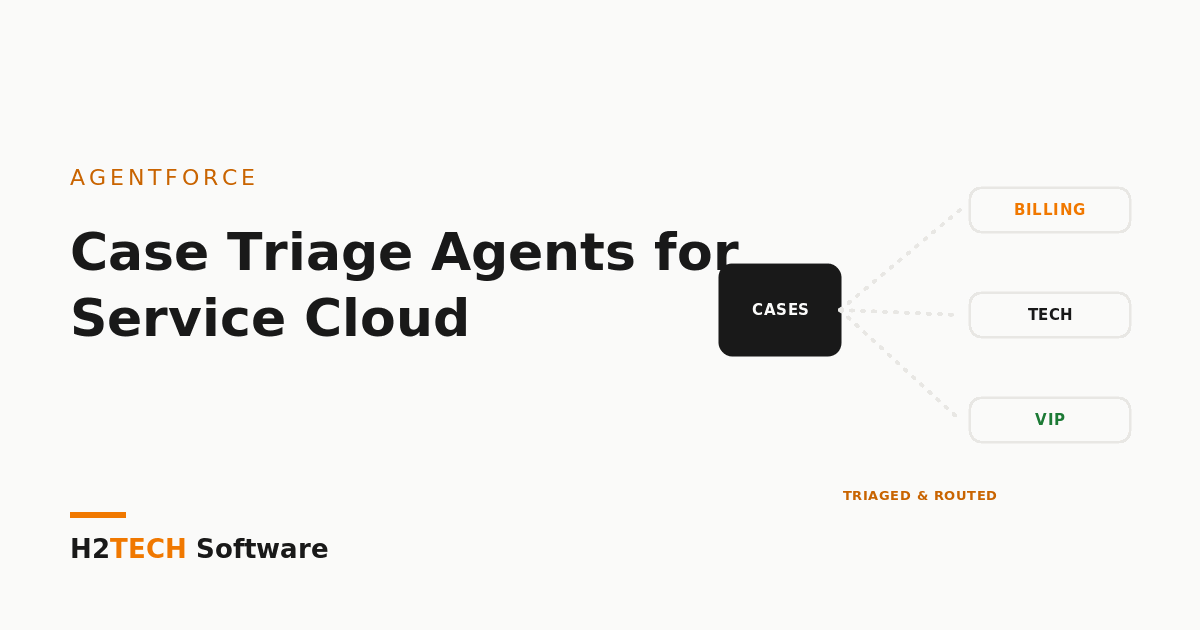
A Service Cloud triage agent reads the incoming case, classifies it, sets priority from real signals rather than the submitter's guess, and routes it to the queue that can actually resolve it. It can attach likely knowledge articles and surface similar closed cases so the assigned agent starts with context instead of a blank screen.
Because it runs on a governed data foundation, its classifications are consistent and auditable, not a black box that support leads cannot explain.
Measured, reviewed, reversible
We instrument triage agents so you can see accuracy over time, and we keep a human override on anything sensitive. Every action is reviewed by a certified engineer before launch, and the whole build is priced on the outcome, not on the tokens it took to tune the classifier.
The payoff is quieter than a flashy demo: fewer reassignments, cleaner queues, and a first-touch that already knows what the case is about.
Key takeaways
- In many orgs the real delay is triage and reassignment, not resolution.
- A triage agent classifies, prioritises, routes, and attaches context on arrival.
- Instrument accuracy and keep a human override on sensitive cases.