
The simplification trap
It is tempting to model the clean version of pricing: list price, one discount, done. Then the first real deal arrives with a volume tier, a partner margin, a promotional override, and a currency conversion, and the tool cannot express it. Reps go back to spreadsheets, and the CPQ investment quietly dies.
If the tool cannot represent the messy pricing you really run, it will not be used for the deals that matter.
Pricing waterfalls that match reality
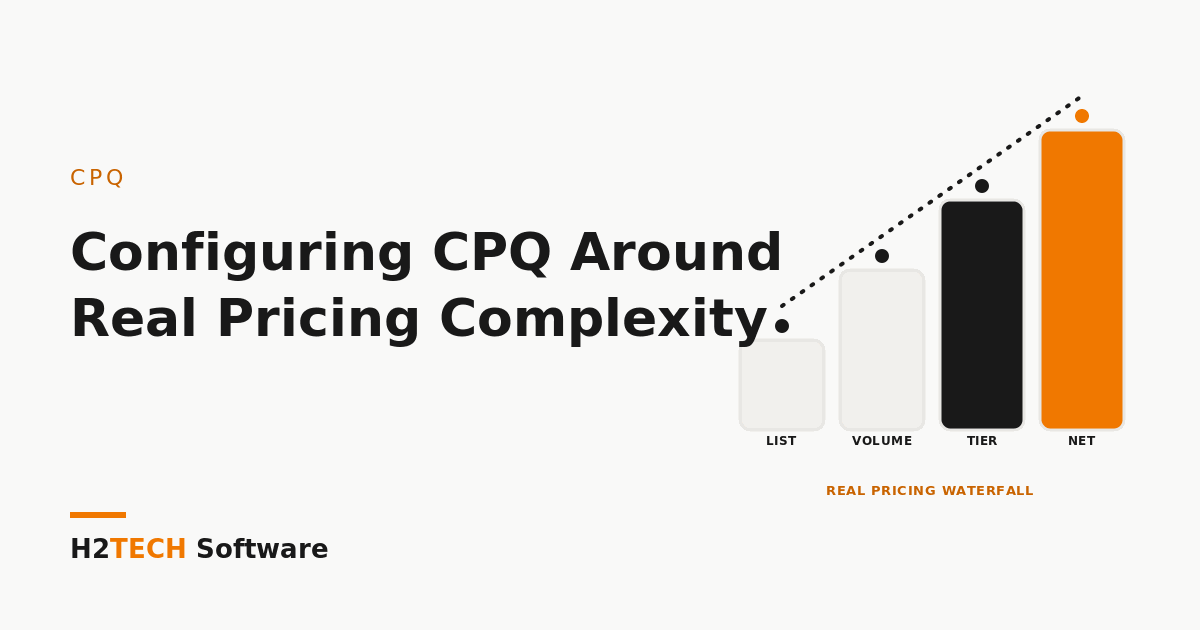
We model the full waterfall: how list price becomes tier price, becomes contracted price, becomes the number on the quote, with each step visible and governed. Volume breaks, multi-currency, partner and channel margins, and approval thresholds are expressed in configuration, not in a rep's head.
Because each step is explicit, finance can see how any quoted price was reached, and approvals key off real thresholds rather than guesswork.
Complexity handled once
The goal is to encode the hard part once so every rep benefits. A ten-thousand-SKU catalogue with tiered, multi-currency pricing is not a reason to avoid CPQ; it is the reason to do it properly. When the waterfall is right, guided selling and automation sit on top of a foundation that will not embarrass you on the complicated deals.
Key takeaways
- Modelling simplified pricing is the most common cause of CPQ failure.
- Encode the full waterfall: tiers, currencies, margins, and approval thresholds.
- Explicit pricing steps give finance visibility and drive real approval rules.